Wednesday, June 22, 2016

Unassuming

Bloom Where Planted #11 mixed media sculpture Jude Spacks 2016
In mid-winter, around the anniversary of my father's death and my birthday a few days later, I took a break from trying to do whatever I assumed needed doing. Instead, I found myself absorbed in making little homes for the tiny statues my father used to keep on his desk. They'd been falling over and and getting lost on the table near my favorite chair

Little Goddess Shrine (detail) mixed media, Jude Spacks 2016

 
Barry's Tara(?) mixed media shrine Jude Spacks 2016


Four Altars; mixed media Jude Spacks 2016

Then I couldn't stop this flurry of nest-makingwhich seemed like good luck. I made one after another. For instance, a little angel out of birch bark, and her wild/domestic home.

Birch Angel Shrine; mixed media, Jude Spacks 2016 (available)
Birch Angel Shrine rear–stands alone or hangs on wall
Winter dragged on. The odd lots store got in some hairy sparkly yarn for $1 a roll, and I binged on almost every color. Something had to be done with it. Unexpected furry flowers appeared, and a tiny purple bird in a hairy nest 
 
Bloom Where Planted #1 mixed media Jude Spacks 2016
Purple Seuss-Bird; mixed media, Jude Spacks 2016

Something possessed me to bring these tousled flowers to the Library, as a token of hope for spring-to-come. It was the week of Dr Seuss' birthday, and the flowers had a Seussian twang to them, so this made a kind of sense. I brought along extra chocolate eggs, like the ones in the bird's nest, for the librarians. The flowers were welcomed to the Library's counter, the chocolate offering stashed in a drawer.

Bloom Where Planted #2 mixed media sculpture, Jude Spacks 2016
Waiting for spring is a watched pot. Waiting for springor for creative insight about a difficulty, or for any kind of fresh startcan be confusing. It feels so urgent, but it can't be rushed. The I Ching says, in Difficulty at the Beginning, "Restless action interferes with the creative process unfolding. If we can persevere in non-action and disengagement, the Creative will resolve everything correctly."A Guide to the I Ching, (Hexagram 3, Difficulty at the Beginning) by Carol Anthony

The restless action that interferes with creative unfolding happens first in the head. The loyal Worried Mind persists in singing its worried song, even though it doesn't help. I was afflicted with Crack-the-Whip thoughts. "We have to hurry up and do something about Important Topics X,Y, Z and especially $!" they insisted. "We don't have time for making more of these silly flowers!"  

March Plow; fabrics and digital Jude Spacks 2015

Last year, there was still a lot of snow in March. This year, the ground was bare, the colors grim and dull, the wind seasonably harsh. My inner weather felt odd. I was being swept along by a fortunate creative thaw, but I couldn't fully surrender to it. Still, even when Worried Mind staged a panic about some seemingly scary circumstances, attention kept pouring into these slow, small pieces.

Before Spring with Nest for Green Rock; mixed media shrine Jude Spacks 2016
detail, Before Spring
An unexpected gust of grateful tears blew in when this Before Spring shrine was finished, late one night. I realized: even while I'd been seeing the current landscape as dismal, something deeper must have been witnessing a living harmony, a crackling spaciousness. Otherwise, how could that beauty have come through into this piece I gazed at with the besotted eyes of a tired new parent? 

I found this reassuring. However Worried Mind might fuss, Open Mind has always been here too, alive with innocent wonder and connection. How could I really know what was important, or useful, what was big or small? It seemed possible to relax more, to get by with a whole lot less of assuming I knew better how things should be. 


Bloom Where Planted #3 mixed media sculpture Jude Spacks 2016
The unassuming hairy flowers kept coming, and I kept bringing them to the Library. The librarians reported that patrons were enjoying them. One person told me she had burst out laughing when she saw the most recent in the series

Solo Flower w/ Librarian Ashley
Solo Flower; mixed media Jude Spacks 2016

They can pose in different positions.

Yellow Flowers; mixed media Jude Spacks 2016
Yellow Flowers 2

Yellow Flowers Embrace

Some have little round mirrors. Many can hang on the wall as well as sitting flat.
 
Bloom Where Planted #6 mixed media shrine Jude Spacks 2016
Bloom #6 from above J Spacks 2016 (available)

They can keep you company on a desk. They'll bop around on their wire stems in the wind of comings and goings.

Flower and Bud; mixed media sculpture Jude Spacks 2016 (available)

detail, Flower and Bud J Spacks 2016
 
When it finally warmed up, along came bugs. Some of the bugs have bits of magnet on their feet, and may stick to a can lid (wrapped with silk) in their shrine-house.

Blue Bug Steps Out J Spacks
Blue Bug at Home mixed media Jude Spacks 2016
First Bug with Mirror Moon mixed media J Spacks 2016

Now, summer is already whizzing by. (News flash: seasons, external and internal, always changeready, or over-ready, or not).

In Jen Louden's wonderful free e-book How to Follow Through on Your Creative Project I saw a suggestion to write a letter to whoever a project was for, saying why you made it:
Here's why I've been creating these flowers and shrines for you....I'm guessing you might suffer sometimes, as do so many of us, from wanting to do something significant, something that matters, that really helps, that touches people and fully expresses what you have to express. But so far nothing seems quite big or effective or true enough and sometimes your disappointed expectations feel sore–even though you know better than to think you should be more enlightened or braver or whatever than you are.  

Maybe a surprise meeting with one of these quirky little pieces could remind you of the tender, comic preciousness of simply being a life-form here, being a unique, hairy, time-limited creature made of ordinary magic-stuff, sweet and small, and just as-is. How sacred this one irreplaceable human life is, in this very instant of no-big-deal relatedness with everything!

More than anything else, here's what I want you to know: you are already so loved, this brief blooming of you, with these exact wavelengths radiating from you, here as this, now. This loves you. That's all. 

Summer Bug Before Tail J Spacks 2016
Summer Bug Gets a Tail J Spacks 2016

Camouflage: Summer Bug at Home; mixed media J Spacks 2016

---------------------------------- 

I'm working on an art website (perhaps Project X which Worried Mind wishes were further along) which will eventually offer these and other works for adoption into your world. I'd also love to make a special shrine for some small item of significance to you. Contact me at judespacks[at]gmail[dot]com to start a conversation about such things?
----------------------------------


Want more? Read about the creative power of not-assuming and expecting–give yourself a quick I Ching reading on Innocence.


Sunday, February 21, 2016

Step Aside


Meh Face, cartoon sketch Jude Spacks '16
I asked a friend how her writing had been going. She shrugged and made a meh sound. The light glinted off the silver typewriter necklace she usually wears.

"I just can't force it anymore," she said.

"That sounds like good news!" I said, feeling vicarious relief.

She went on, "But the other day I saw this cloth I've been wanting to make curtains out of forever, and before I knew it, I'd started working on them." She brightened. "I'd forgotten how much I like touching fabric and ironing seams. I was so into it! I thought doing that might somehow help my writing flow more. But maybe I'm kidding myself--I'm probably just justifying my procrastination." She deflated a bit.

"I don't know," I said. "Resistance might also look like judging a movement of real creative inspiration by calling it procrastination." 

"That's true," she said. "It felt right at the time, but then my head likes to second-guess everything." 

"Most heads do," I agreed.

Seeing the Handwriting on the Floor, markers+digital, Jude Spacks '16
When is it a good idea to step aside from your important work, and follow a tug in another, probably less exalted, direction? How can you tell if you're indulging a procrasto-habit of scattering your attention, avoiding whatever you're truly called to devote yourself to? 

Never mind that for now. Aren't you tired of wondering whether you're doing the right thing the right way? It takes a lot of juice to run that background monitoring program in the brain which identifies us with what we do, keeping tabs on our imaginary bank accounts of gold stars and demerits with extra brownie points for effort.  

Refresh those poor synapses that have been laboring in the mucky ditches of old neuropathways, trying so hard to earn your keep. Take a pause, redirect, reboot. Anytime, anyway you dive back into Here-Now, you serve your own true-loving, mysterious, zig-zagging, roller-coastering Creative Process.
------------------------------------------

Truth and Dare coaching invites the liberating laughter
of seeing through scary mind-made illusions
to the reality of your own brilliance in action.
As stale thinking clears, the stress of trying to control the uncontrollable evaporates.  
You reconnect with your own renewable resources of presence, wisdom and confidence. 
Your realistic graceful solutions occur to you.
You find yourself walking with a lighter step 
along the unique path that feels right for you now--
exactly as you already are, before you've got it all figured out.
  
Want to talk over possibilities for working with Jude?

Schedule a call to Explore Coaching Options

(This links you to my on-line scheduling page, where you'll see a list of types of appointments. Select "Explore Coaching Options" and book your time. I'll look forward to talking with you)
 ------------------------------------------

Here's another post on freedom from forcing it: A Theory 
And an article on finding real discipline for sticking with your work: Dogged Dedication 

Sunday, November 1, 2015

Tidy Mind

If you come across something that does not spark joy
but that you just can't bring yourself to throw away,
stop a moment and ask yourself, 'Am I having trouble getting rid of this because of an attachment to the past or because of a fear for the future?'
Marie Kondo, The Life-Changing Magic of Tidying Up

Since taking a ride on Marie Kondo's tidy-magic bandwagon, I've been feeling tender and open as I let go of things which I had been keeping 'in case'. It's turning out to be quite the practical practice of trusting the present moment, where I actually live. 


'Just In Case' drawing (markers) by Jude Spacks


As Kondo-san says, attachment to the past can make decisions murky. But what is this 'past' I find myself clutching on to, related to some forsaken item? A memory, an outdated plan, a storyline, a shifting mental position which reality has already left behind. 


'Attaching to Past Thought' cartoon by Jude Spacks

"The worst thing that can happen is a thought."--Byron Katie
Fear for the future happens in the imagination, too, like the past does. It is an uncomfortable current thought-form, no matter how valid its predictions. 

Future-fear seems to be trying to protect me from experiencing thought-feelings that might or might not show up in reaction to things that may or may not occur. I doubt it helps much to prepare for what may actually happen later on–I'm more likely to be resourceful in the unknown future moment if I'm not weighted with anticipatory worry. 


'Thinking Future Thought Now' cartoon by Jude Spacks


Trying to make the 'right' decisions now to keep myself from thinking unhappy thoughts later is a tense, defensive way to live. It's a neat, self-fulfilling, often unconscious, theory that if I do the 'right' thing I get to feel good, but if I make a mistake, I'll have to feel bad.

'Fear of Future Thought' drawing (markers and digital) by Jude Spacks

Do thoughts (and the feelings they bring) really play by these rules? 


For instance, sometimes I see with hindsight that I made a regrettable choice and yet still feel just fine, knowing I did the best I could at the time. Sometimes I give myself a hard time with no justification whatsoever from 'mistakes'. Things happen that aren't what I imagined I wanted and I may still enjoy a clear, open, grateful mind about them–or, not. 

'JoySpark Thought?' cartoon by Jude Spacks

Thought-feelings will come and go, including thoughts that call choices good or bad. Thoughts take available evidence about circumstances and spin it however they do, and, so what? Why take them so seriously? Keep what sparks joy, for now.

“I think 99 times and find nothing.
I stop thinking, swim in silence, and the truth comes to me.”
--Albert Einstein

'Blue Thought' cartoon by Jude Spacks


____________________________________________________________________________________

Want to have a happier relationship with your own thinking?
Check out whether a coaching conversation might be just-right support
for reconnecting with your own wisdom and commonsense.
 ______________________________________________________

Here's another post on liberation from self-government by Bogus Thought Laws: 
Woman Stops Braining Herself With Carrot Stick
______________________________________________________
 

Thursday, June 18, 2015

Innocence


What are you expecting of yourself and others? Wondering how it's all going to turn out?
Want a reading about that, based on the wisdom of the I Ching Book of Changes?
  • Jot down a topic you're curious about. 
  • Pick a number between 1 and 6.
Read the post below, +/or scroll down to the end to see the reading that corresponds with your number.
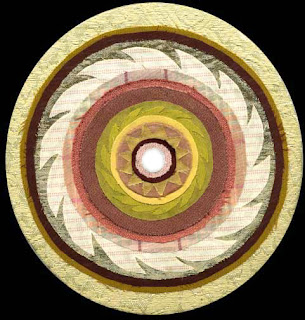
circular picture in fabrics
Innocence Mandala, fabrics, by Jude Spacks

I am always very happy to see Hexagram 25, Innocence (The Unexpected) show up in an I Ching reading. It points me back to the wholesome satisfaction of doing things for their own sake, without conniving about outcomes. The I Ching calls this "supreme success": to move into action from a mind that is "natural and true, unshadowed by ulterior designs" (I Ching Book of Changes, Wilhelm/Baynes trans). 


It also reminds me that if I'm trying to force things to work out in my favor, it's likely that nothing much will work out at all—it would be better not to undertake anything with that kind of defensive, pressured mindset. Likewise, if I come from a slapdash self-indulgent mood which is the flip side of pressure-head, I won't connect with the genuine ease and sureness of innocence.

This inherent, mature innocence is not naive or impulsive. It is a state of openness to the movement of the unpredictable. Innocence orients us to the present-moment flow of creative inspiration.


When we're not expecting an outcome or projecting our own mental state outwards onto circumstances, we're fully available to the present. In the undefended mind of innocence, there are no foregone conclusions. We are at home with the fact that we don't know what will happen later, and we go about our business, naturally harmonizing with what is happening now. It feels right. 

But sometimes the innocence of residing in one's center without expectation of results seems vulnerable and risky. We might think we must throw ourselves outwards into efforts to manipulate externals through expecting and projecting.  

Expectations can give an illusion of egoic control. "I expect you to finish this immediately!" has a nice tough sound to it. Like, "I'll hold my breath till my face turns blue!" Maybe sometimes it works to force things to bend to your will.

But if I'm depending on getting my way to feel ok, I've outsourced my happiness, which is not a position of real power. When I expect others (or myself) to conform to my wishes, I set myself up for resentment: disappointment laced with blame.  

The Courage of No-Defense, digital artwork by Jude Spacks

If we give up the willful control of expecting/projecting, what will be left? Will we just sink down into lazy lumps and never get anything done?

It might be worth questioning the notion that we're programed with a lazy-lump default we must constantly labor to override. Basically that assumes we are guilty of indolence until proven innocent, again and again.

The innocence of going with the flow doesn't mean the flow always goes where we'd like it to. It means that we're able to respond to unfolding reality with full access to our natural intelligence in the moment, unclouded by a struggle to force externals to match our projections and preferences.


What if we already have the natural curiosity, ingenuity, stamina, perseverance and all the other qualities we need to accomplish what can really be useful to us and the Whole?

People in touch with their original state of innocence are "rich in virtue and in harmony with the time, [and can] foster and nourish all beings" (I Ching Book of Changes, Wilhelm/Baynes trans).  


Questions for Reflection

Consider the 12 Step slogan "Expectations are premeditated resentments."
  • Where might you be expecting things of others or yourself that set you up for resentment and dissatisfaction? 
  • Scan your current plans. Are you depending on some outcome? How does that feel? Is it nourishing to you and to others?
  • What, specifically, might you be expecting of yourself today? What would it be like to drop that expectation, to see it as only a passing thought-form?
  • What would it be like to enter your next activity wholeheartedly, just to do it, without concerning yourself with evaluating how you're doing or what comes next?


Want a reading about innocence and expectations in some area of your life?  
So, did you think of a topic related to this that you're curious about?  
And did you pick a number between 1 and 6?
Now, read the message below corresponding to your number. 
(Or, read them all and see which resonate for you). 
Keeping an open mind, do you see how these pointers might apply to your situation?
  1. Follow the original impulse of your good heart with confidence. Remain detached about outcomes, making no plans to influence what might happen. Everything will work out for the best for all concerned.
  2. Keep doing every task for its own sake, in a flexible way appropriate to the time and place. Don't divert attention into speculation or planning about possible results. As you keep your eyes on the needs of the moment and the task right at hand, your work turns out well and your undertakings succeed. 
  3. Sometimes things happen that we don't like and which are not our fault. Act with care and integrity in even the smallest transactions; coming from your center doesn't mean you ignore the context you're in. Accommodate yourself with acceptance to the demands of the actual situation.
  4. You can't lose what is really yours, so you can relax. Attend only to remaining true to your own nature. Don't pressure or distract yourself with opinions, desires or fears. Stay with what's essential and immediate and you'll know when and how to be helpful. 
  5. If something unwanted comes along by accident, don't combat it with external means. As long as it isn't rooted in some fixated confusion within you, it will naturally improve by itself.
  6. If the time is not ripe for further progress, it's best to wait quietly, without planning, scheming or explaining. It won't work to try to push ahead in opposition to the way things are going. Give others space to come to understanding for themselves and just tend to what's in front of you now. 

Mat for Tossing I Ching Coins On, fabrics, by Jude Spacks
I doubt I'll get to posting about all 64 hexagrams of the I Ching, but here some others, which also invite you to connect with the oracle on a topic :#3 Difficulty at the Beginning,  #5 Waiting  #12 Standstill #57Gentleness and #60 Limitation.

Enjoy the creative courage of your natural innocence today!  


 --------------------------------------------------------------------------------------- 

Friday, October 24, 2014

Monster Mirrors Part 1


For years now, I've been working on a graphic book about self-reconciliation called The Innocence Trip: How to Kiss and Make-Up When You've Been Fighting Inside. 

This summer, I ditched the self-helpish version I'd labored over, and tried a new approach. It starts with a little cartoon about how scary thoughts seem realer when we argue with them and then goes into an illustrated memoir about my own (in-progress) liberation from guilt-tripping and other made-up mind traps.

Working on this version, I've had the turvy feeling of walking out beyond the edge of my maps. A spot of ground the size of my foot appears as I'm stepping on it, bringing a dizzy thrill. Or, What Next? doesn't appear yet, so I wait in not-knowing, and tend to other things.

Here's the cartoon intro, in time for Halloween. 


To be continued....


Wednesday, October 1, 2014

Fun With Your Plastic Brain


Neuroplasticity Success Story 

A friend suffered from chronic pain for years. She experienced her first sustained relief after working with a healer whose methods apply new findings about neuroplasticity--how the wiring of the brain can transform.

She continues to practice what she learned. When she first feels the painful sensations, she reminds herself that the pain occurs only in her brain, not elsewhere in her body (where physical causes have been ruled out). Then she redirects her mind to something else, like singing a song.

Simplistic as it sounds, changing the channel this way has been revolutionary for her. She has stopped reinforcing the neural pathways of pain and has tangible evidence that they are dwindling. She is relaxing into longer and longer pain-free periods.

The Pain is in the Brain

This friend's experience suggests a powerful way to look at transforming your own mental pathways. The first, crucial step is to realize that the difficulty you face is happening in your brain.

This reframe looks simple, and sometimes it is. It might be easy to remind yourself
that pain is in the brain if you already believe it doesn't really indicate something wrong in the body or the world, even though it might feel like it does.

But often it may seem irrelevant or inaccurate to see the pain as in the brain--especially when it looks like a difficulty lives outside, in our circumstances, with the brain only passively, objectively pointing it out.


The Mind is a Magician

The mind's job is to project its interpretations outwards and to believe its own conclusions. It creates the often highly adaptive illusion that its interpretations actually are reality.

This illusion makes for useful efficiency in many circumstances. We can go with our brain's best guess without being distracted by awareness that a guess was involved.

Usually the show
is seamless. We might only become aware of the brain's magic of projecting interpretations as reality when there's been a misinterpretation of sense stimuli for some reason--when a mirage dissolves, for instance. But we're also influenced by a skillful illusionist when we believe there's no interpretation happening at all.

The Brain Behind the Curtain

Remember in The Wizard of Oz when Toto pulls back a curtain, exposing the Wizard as he manipulates the mechanisms that have been producing such impressive illusions? The magician brain sometimes has these Wizard-of-Oz moments, intoning "Pay no attention to the one behind the curtain"--it tries to hide its own role in creating our experience.
 

I know someone who lost her hearing in one ear. When she's in bed, the window is to her right, the side where her hearing loss is almost total. So now she hears sounds from outside the window as if they were coming from the left, inside her apartment.

But for her, there is no as if. Her brain confidently informs her, for instance, that a dog is barking outside her bedroom door (since she has no dog, she finds this unnerving). Her brain continues to interpret information as it did when she received sound data from both sides of her head
. She gets to see the magician brain at work, spinning a story which might just as well be fiction as non-fiction.

What about mental distress?

It looks like a (forgive me) no-brainer to say the painful mental-emotional patterns that lead to creative blocks happen in the brain. For instance, if you get harassed by jeering critical voices when you try to work, obviously the problem is in the head; where else could it be?

But it can often feel like painful patterns are just the way things are, as if they were simply happening to you. Without really noticing, you may experience the discomfort of a habitual pattern as if it occurred out of reach of the brain which actually creates and projects it.

You might believe that the pain of those critical voices was caused by people who said
mean things like that to you long ago. If so, you're believing a fixed story of a past. However insightful it might be about the origins of the pattern, such a story hypnotizes you into forgetting that the pain now is being invented in your current neural pathways--which can change.

Working Worst Under Pressure

Maybe as a deadline careens towards you, pressure starts squashing your inspiration.
You just need another few days, or a better night's sleep. If you had more money or fewer responsibilities breathing down your neck, you'd be fine....but right now you have a real problem. You didn't make it up. It truly seems like the difficulty is happening outside the brain's jurisdiction--the oldest slight-of-hand in the mind's bag of tricks. 

When you stop to consider, you see that the pressure problem comes not from the actual deadline, or the number in your bank account, etc, but from your reaction to these conditions, salted with ideas about your limitations and priorities, with a side of self-concepts about your worthiness, and so on. All that originates in your brain, not in the calendar or the bank's computer.

The Future is an Act of Imagination

You might be watching a gripping mental movie about how not meeting that deadline will lead to your eating out of garbage cans and applying all your creative zip to reorganizing the  bags in your shopping cart.

"Fix it! Emergency! Emergency!" Your protective mind just amped up its job of convincing you that what it shows you is reality. "This pressure is real," it insists. And it is real, inside the mind that is experiencing it. As real as the phantom limb pain which the brains of amputees locate in a body part that no longer exists.

Future Fear

Fear can sound as certain as a meteorologist predicting the chance of dawn tomorrow morning. But fear does not have the predictive power it seems to.
Sure, maybe you'll find yourself pushing that shopping cart on the street, and maybe you'll be loading it with high-end organic goodies in the supermarket.

Where does fear exist? Is it in the future circumstances and consequences you want to avoid? However helpful it might be to consider possible outcomes when planning, they haven't happened yet and have no actual reality. Fear occurs only here and now, through the mental process of imagination and the bodily sensations that reflect it.

All creative blocks involve fear in some form--
fear of failure, success, or embarrassment, fear of change, of loss, of people's opinions. And no matter what their content, fearful thought patterns can change, once you realize that the pain is in the brain, nowhere else.

Got it. Then What?

OK, so now you're convinced by your reframe: you have your brain
to thank for the experience of a block, not external circumstances, past, present or future.

Based on the success story we started with, your next step would be to find an effective way to change the channel and stop reinforcing the mental pathways that got you into this pickle. With practice, that old road to suffering will disappear from disuse, as new mental pathways strengthen. Brain research confirms that this is literally, physically the way it works.

Where's The Remote?

How exactly to change the channel? This is a creative endeavor of its own, calling for experimentation. Getting creative about freeing your creativity has to come out of the particulars of your challenges. What might happen if you noticed the specific mechanism of a block and then consistently interrupted it with a change of focus at the first signs?

Here are a few approaches you might want to play with.


Stop.

For brain circuitry to change, it first has to stop doing what it's always done.

When people can't use an arm because the relevant part of their brain has been disabled by stroke, re-training the brain begins with stopping using the arm that still works. The 'good' arm is bound in a sling so that some of the neurons that direct it can re-wire to control the other arm. Intensive practice with the 'bad' arm creates the new pathways that are needed.

Experiments have shown that neurons that fire together wire together--if different neural pathways are often used at the same time, they begin to physically integrate with each other until it becomes difficult to re-differentiate them.

The habit of a creative block may be made up of a lot of different coordinated factors. To stop, to put the pattern in the equivalent of the 'good' arm's sling, might mean to practice inhibiting one or more factors in an almost mechanical way.

For instance, I write very slowly. I've never been able to write a quick and dirty first draft, and I've tried. (It might be dirty, but it sure isn't quick!) The functions of editing, rewriting and writing new parts are usually all mixed together for me.

I've noticed that I often go back to the beginning of a piece and reread, while editing, to orient myself before writing what's next. Sometimes that's useful, but I'm guessing it's often part of how I slow myself down.

So I'm trying out stopping rereading what I've already got. When I don't know what's next, I simply stop myself from backtracking. I'm not being rigid about it, but my hope is that this might start to differentiate rereading and fresh writing from each other, and give me more efficiency and flexibility in my writing process.

What part(s) of your block could you practice stopping?


Curing Illusion with Illusion

Neuroplasticity research has led to relief for amputees with phantom limb pain. Often a missing limb is experienced as painfully stuck in a position it was in before it was removed. New treatments use mirror boxes constructed like the props for a magic show. In them, the brain 'sees' a mirror image of a missing limb and moves it; this allows the brain to stop sending out its message of stuckness.

When affirmations work, perhaps a similar trick is involved. You convince yourself that your illusion of stuckness has already been resolved. You might experiment with giving yourself tangible signs which mirror that the block or problem is already over.

For instance, if you chronically start worrying about money instead of giving yourself over to the next steps on your project, you might open a special bank account that you tithe a percentage of your earnings into, to symbolically or literally fund creative time. There are some other ideas about breaking through money blocks here; (remember, the pain is in the brain, not the cash or lack of it).

Attention!

Our friend at the beginning of the article takes her attention off brain-created pain sensations and throws herself into singing. When attention engages freshly, its previous focus disappears.

We've all experienced this. While you're ripping open an envelope containing the answer you've been waiting for, you don't really notice the toe you just stubbed. And if you don't feel pain, it's not there.

We often practice this kind of common sense anyway; now neuroscience explains that it actually rewires our brains. So when you catch yourself feeling stuck, put your attention somewhere else. Get involved in something completely different--go for a walk, or set a timer and doodle for 10 minutes, or, or, or....

It may take focused intention to recognize that a block mechanism is in process, and to then redirect that attention energy elsewhere. Or, it might be as easy and natural as cooperating with the urge to let out a sigh, stretch your body, take a drink of water and refresh yourself. 


You don't have to know the solution yet--that may come anytime as the gift of an insight from your deeper intelligence. Your channel to the infinite and mysterious source of all creative inspiration is still here, no matter what temporary weather of  reactivity you're experiencing. 
  
-------------------------------------------------------------------------------------------


Would you like to explore how you can more fully discover 
freedom from stressful mental habits
and live with the clarity and ease of your natural wisdom?

Truth and Dare Coaching invites the liberating laughter
of seeing through scary self-made illusions
to the reality of your own brilliance in action.

Thursday, July 24, 2014

Dark Joke

One black hole says to another, "You are so self-absorbed!"